When Google rolled out Nano Banana 2 to 141 countries on February 26, 2026, developers integrating it via Vertex AI reported cutting visual content production timelines from five days to under four hours. Most e-commerce brands and digital agencies are still treating it like a novelty rather than a production tool, and that gap is costing them real money.
Quick Summary
- Nano Banana 2 is Google's latest image generation model, available through Gemini, Vertex AI, and AI Studio as of February 2026
- It supports 512px to 4K output with character consistency across up to 5 subjects and object fidelity for up to 14 items per workflow
- SynthID watermarking has surpassed 20 million uses since November 2025, making AI content disclosure a practical compliance issue, not just a policy footnote
- For e-commerce, the model reduces product photography costs significantly, but has specific failure modes that require a hybrid approach
- Commercial use is permitted under Google's current terms, with disclosure requirements that vary by platform and jurisdiction
Table of Contents
- What Nano Banana 2 Actually Does (Beyond the Spec Sheet)
- Nano Banana 2 for E-Commerce: Real Cost Savings vs. Traditional Photography
- How to Integrate Nano Banana 2 into WordPress and CMS Workflows
- Nano Banana 2 vs. DALL-E 3, Midjourney, and Stable Diffusion 3.5
- Key Takeaways
- Frequently Asked Questions
- Can Nano Banana 2 generate images that rank in Google Images search?
- What is the actual API cost per 1,000 images generated with Nano Banana 2?
- How does Nano Banana 2 handle brand logos and trademarked elements?
- Can I use Nano Banana 2 images commercially without attribution?
- What are the most common failure modes when Nano Banana 2 produces unusable output?
What Nano Banana 2 Actually Does (Beyond the Spec Sheet)
The spec sheet tells you Nano Banana 2 supports resolution outputs from 512px to 4K. What it doesn't tell you is that the jump from the original Nano Banana model to version 2 is most noticeable in production-scale use cases, specifically in how it handles multi-element scenes without visual drift.
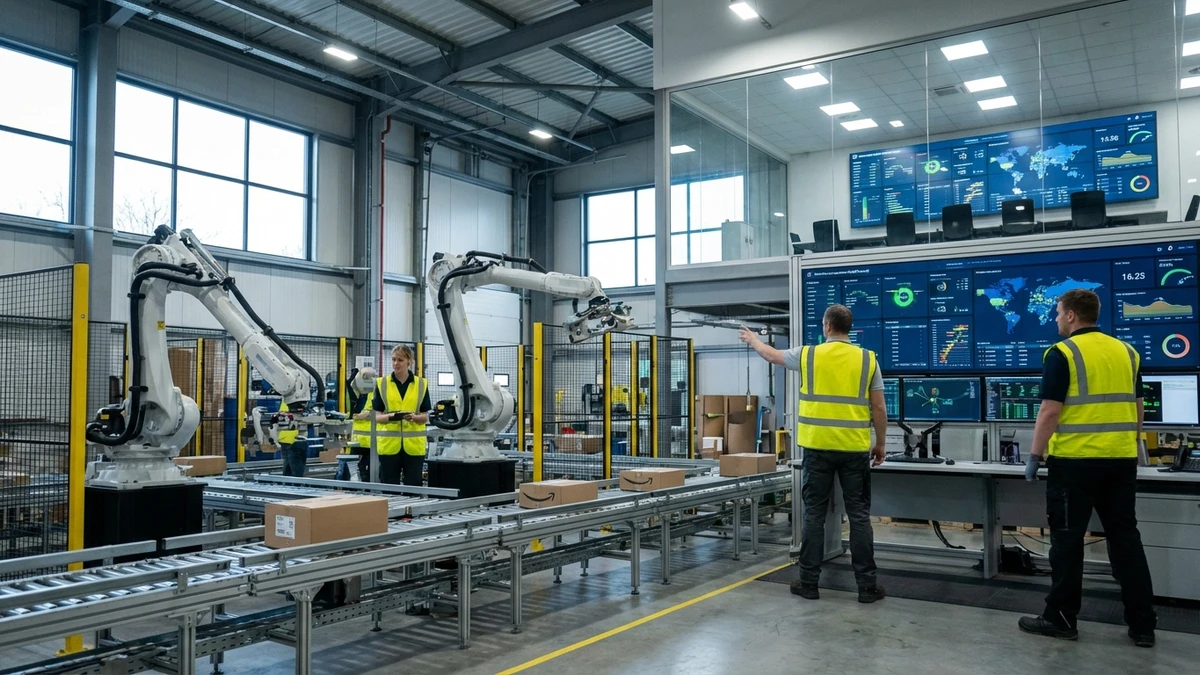
Character consistency across up to 5 subjects in a single workflow is genuinely useful for lifestyle brand content. Object fidelity for up to 14 items per workflow means you can generate a product flatlay with packaging, accessories, and environmental props without the model losing track of what belongs where.
Speed improvements over the original model are meaningful in batch generation contexts, where running 50 to 100 images sequentially makes turnaround time a real operational variable.
Where it lives in the Google ecosystem matters. Nano Banana 2 is integrated across Gemini, Google Search, Google Lens, Flow, the Gemini API, Vertex AI, and AI Studio. For businesses already running on Google Cloud, this is not a new vendor relationship. It's an extension of existing infrastructure, with unified billing and IAM permissions you already manage.
The SynthID and C2PA verification layer deserves more attention than it typically gets. SynthID embeds an imperceptible digital watermark into every generated image, and as of February 2026, the technology has surpassed 20 million uses since its November 2025 launch.
That adoption rate signals that AI content verification is moving from optional to expected.
Businesses publishing AI-generated visuals at scale should review platform-specific disclosure policies, since Meta, LinkedIn, and Google's own ad policies each have distinct requirements, and build SynthID verification into their publishing workflow from the start, not as an afterthought.
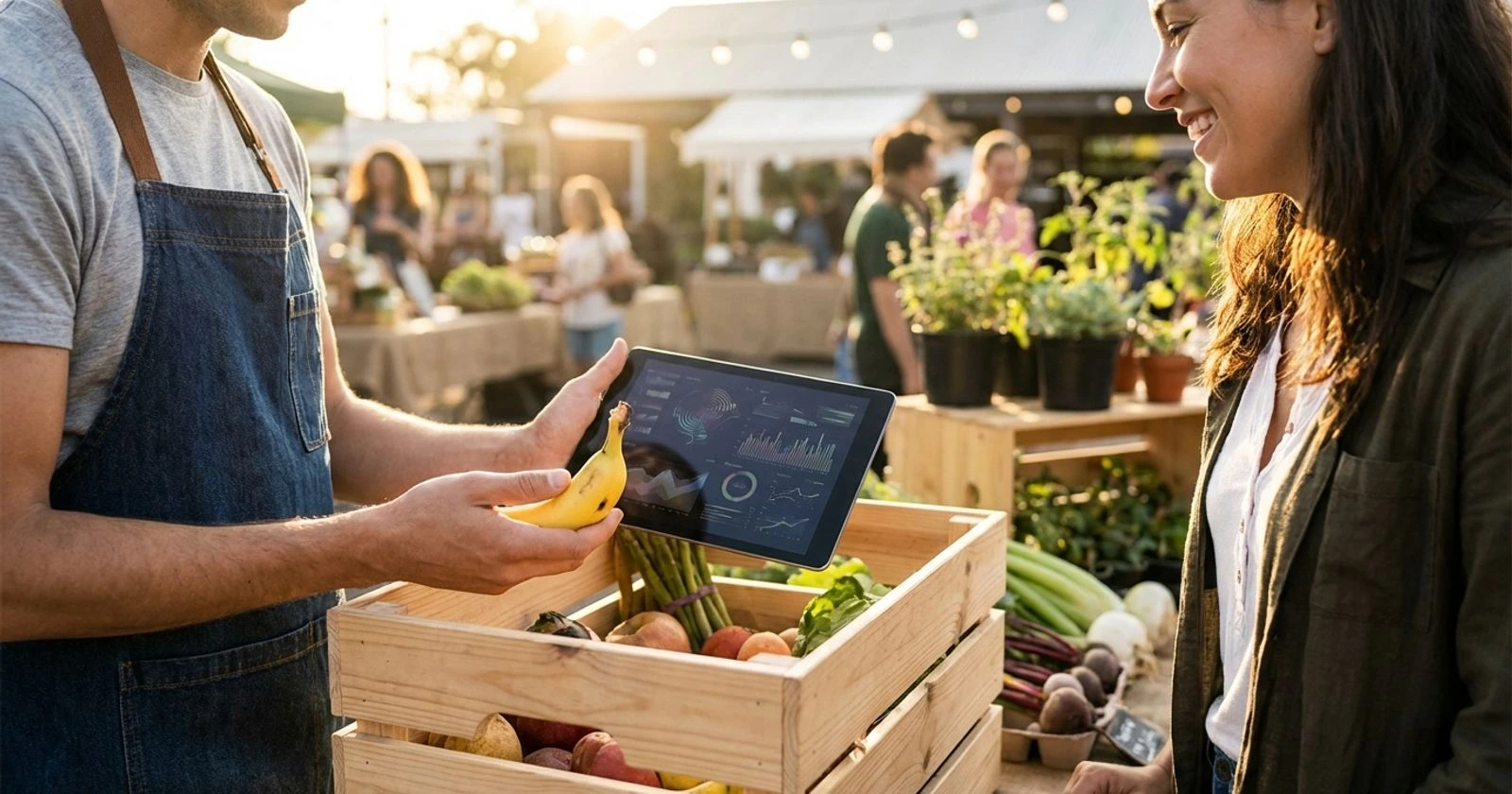
Where Nano Banana 2 performs well: lifestyle imagery, product mockups, editorial and blog visuals, seasonal campaign assets, and color or size variation images.
Where it still struggles: complex hand rendering at scale, hyper-specific brand logo replication, niche industry visuals requiring regulatory accuracy (medical devices, pharmaceutical packaging), and culturally nuanced imagery where contextual precision matters.
Nano Banana 2 for E-Commerce: Real Cost Savings vs. Traditional Photography
Traditional product photography has a cost structure that most e-commerce brands accept without questioning. A photographer's day rate runs $500 to $2,500 depending on market and specialization.
Add studio rental ($300 to $800 per day), props, post-production editing ($50 to $150 per image), and a typical turnaround of 5 to 10 business days, and a single product shoot with 20 lifestyle images can cost $3,000 to $6,000 before revisions.
Nano Banana 2 via the Gemini API changes that math significantly for specific use cases.
| Dimension | Traditional Photography | Nano Banana 2 (Gemini API) |
|---|---|---|
| Cost per image | $30–$150 (post-production included) | $0.02–$0.08 (resolution-dependent) |
| Turnaround time | 5–10 business days | Minutes to hours |
| Revision flexibility | Limited (reshoot costs apply) | Unlimited prompt iterations |
| Brand consistency control | High (art director on set) | Medium (requires structured prompting) |
| Commercial licensing clarity | Clear (work-for-hire contracts) | Permitted under Google's terms; disclosure may apply |
The strongest ROI use cases for e-commerce are lifestyle mockups for new product launches, color and size variation images (generating 12 colorway images from one base prompt costs a fraction of a reshoots), seasonal campaign visuals where speed-to-market matters, and A/B test creative where you need 10 to 20 variants to test headlines and visual treatments simultaneously.
The honest limitation: luxury goods, tactile products (leather goods, textiles, handmade items), and regulated categories like food and pharmaceuticals still perform better with real photography. Consumers buying a $400 handbag or a supplement product respond to photographic authenticity that AI imagery doesn't yet replicate convincingly.
A hybrid approach works best here: use Nano Banana 2 for supporting visuals, seasonal banners, and variation images, while reserving photography budgets for hero product shots and packaging close-ups.
Pro Tip: When generating product variation images at scale, use a locked "base prompt" that defines your lighting setup, background, and camera angle, then append only the variable element (color, size, material). This keeps visual consistency across a product catalog without manual prompt rewriting for every SKU.
How to Integrate Nano Banana 2 into WordPress and CMS Workflows
Accessing Nano Banana 2 programmatically starts with the Gemini API or Vertex AI. Authentication uses a standard API key (Gemini API) or service account credentials with appropriate IAM roles (Vertex AI).
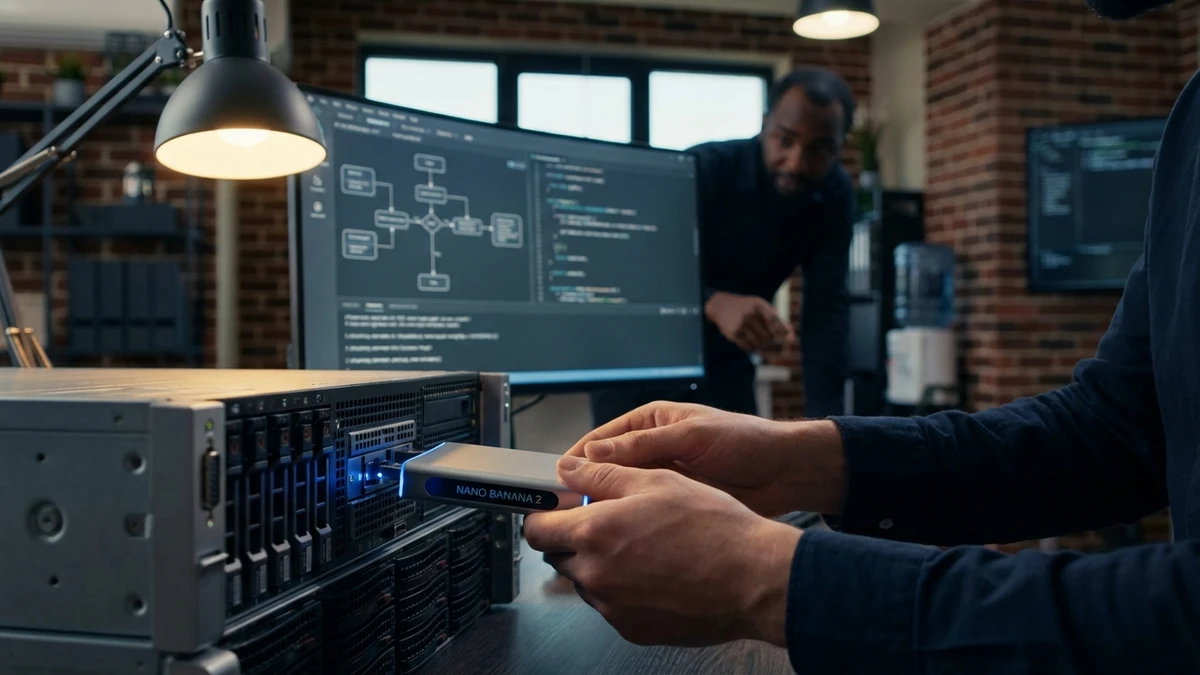
A basic image generation call sends a POST request to the model endpoint with a JSON payload containing your prompt, output resolution, and desired aspect ratio. The response returns a base64-encoded image or a Cloud Storage URI depending on your configuration.
For WordPress specifically, there are three practical integration paths:
- REST API hook approach: Use WordPress's
rest_api_inithook to register a custom endpoint that calls the Gemini API and stores the returned image in the WordPress media library viawp_upload_bits()andwp_insert_attachment(). This works well for automated featured image generation tied to post creation events. - Plugin connectors: Several WordPress AI plugins now support Gemini API connections. Evaluate them against your specific workflow, paying attention to how they handle API key storage (environment variables, not hardcoded) and whether they support batch generation.
- Custom integration: For agencies managing multiple client sites with distinct brand guidelines, a custom integration built on the Gemini API gives you full control over prompt templates, output naming conventions, and quality review checkpoints.
Brand consistency at scale is the hardest operational problem. Generating 100 images across 10 client accounts without visual drift requires structured prompt templates, not freeform prompting.
Think of it like a style guide for your AI: the same way a brand book locks down typefaces and color values, a prompt template library locks down background style, lighting treatment, color temperature, and compositional rules, leaving only content variables open.
Pair this with a quality review checkpoint before images enter the publishing queue.
For SEO, file naming and alt text matter as much as image quality. Use descriptive, keyword-informed file names (not gemini-output-00247.jpg), write unique alt text for every image, and add structured data markup (ImageObject schema) for product images. SynthID verification should be the final step before publishing, with a logged confirmation that the watermark is present and intact.
At Biteabyte, building these kinds of production-ready AI workflows into CMS environments is part of what we do for e-commerce brands and agencies. If you're evaluating how Nano Banana 2 fits into your content operations, talk to a specialist on our team to get a clear picture of what's actually worth implementing at your scale.
Nano Banana 2 vs. DALL-E 3, Midjourney, and Stable Diffusion 3.5
| Model | Output Quality | API Availability | Pricing (est. per 1K images) | Commercial Licensing | CMS Integration Ease |
|---|---|---|---|---|---|
| Nano Banana 2 | High (4K capable) | Yes (Gemini API, Vertex AI) | $20–$80 (resolution-dependent) | Permitted; disclosure may apply | High (Google ecosystem) |
| DALL-E 3 (OpenAI) | High | Yes (OpenAI API) | $40–$120 | Permitted under OpenAI terms | Medium |
| Midjourney v7 | Very High | Limited (no public REST API) | Subscription-based (~$30–$120/mo) | Permitted (paid plans) | Low |
| Stable Diffusion 3.5 | High (self-hosted) | Yes (self-hosted or API) | Variable ($0–$60 depending on hosting) | Open weights; commercial use varies by license | Medium–High |
Nano Banana 2 has a structural advantage for businesses already in the Google ecosystem. Native integration with Vertex AI means you're working within existing Google Cloud billing, IAM, and monitoring infrastructure. That reduces the operational overhead of adding a new AI vendor, which matters for enterprise deployments where procurement and security review cycles are long.
Pricing transparency across models is inconsistent. Nano Banana 2 costs are resolution-tier dependent: lower resolution outputs (512px to 1024px) fall at the lower end of the estimated range, while 4K outputs carry higher per-image costs. OpenAI's DALL-E 3 pricing is publicly documented and similarly tiered.
Midjourney's subscription model makes per-image cost calculation difficult for high-volume use cases. 5 can be cost-effective at scale if you have the infrastructure to self-host, but that introduces engineering overhead that most SMBs can't absorb.
Recommendation framework by business type:
- Solo creator or small content team: Midjourney v7 for highest aesthetic quality at a predictable monthly cost, assuming API access isn't a requirement
- SMB e-commerce (50–500 SKUs): Nano Banana 2 via Gemini API for cost efficiency, CMS integration, and Google ecosystem alignment
- Enterprise agency managing multiple client accounts: Nano Banana 2 on Vertex AI or DALL-E 3 via OpenAI API, depending on existing cloud infrastructure. Nano Banana 2 wins if Google Cloud is already in use.
Key Takeaways
- Nano Banana 2 is Google's latest image generation model, rolled out to 141 new countries and 8 additional languages as of February 26, 2026
- It supports 512px to 4K output, maintaining consistency across up to 5 characters and 14 objects per workflow, which makes it production-ready for most marketing use cases
- SynthID watermarking has surpassed 20 million uses since its November 2025 launch, making AI content verification a mainstream compliance requirement that agencies need to build into publishing workflows
- For e-commerce businesses, the model can reduce product photography costs by 60 to 90 percent for specific use cases, but luxury, tactile, and regulated product categories still benefit from a hybrid approach
- Commercial use is permitted under Google's current terms, but disclosure requirements and brand safety considerations apply and vary by platform
We help e-commerce brands and digital teams integrate tools like Nano Banana 2 into real production workflows, not just proof-of-concept demos.
Whether you need CMS website development with API integrations built in, SEO optimization that accounts for AI-generated visual content, or a full content production system that combines AI efficiency with brand consistency, we offer a full suite of digital marketing services including web design, SEO, and SMM.
and get a clear picture of what's worth implementing at your scale.
Frequently Asked Questions
Can Nano Banana 2 generate images that rank in Google Images search?
Yes, AI-generated images can rank in Google Images, but the same SEO fundamentals apply: descriptive file names, unique and specific alt text, and ImageObject structured data markup all contribute to indexability. SynthID watermarking identifies images as AI-generated but does not currently appear to penalize ranking. Google's stated position is that image quality and relevance are the primary ranking signals.
What is the actual API cost per 1,000 images generated with Nano Banana 2?
Based on publicly available Gemini API pricing as of February 2026, estimated costs range from approximately $20 to $80 per 1,000 images depending on output resolution. Lower resolution outputs (512px to 1024px) fall at the lower end of that range, while 4K outputs carry higher per-image costs.
Vertex AI pricing may differ based on your Google Cloud tier and committed use agreements.
How does Nano Banana 2 handle brand logos and trademarked elements?
The model is not designed to replicate specific trademarked logos or brand marks accurately, and attempting to generate near-trademark imagery carries real legal risk under trademark infringement frameworks in most jurisdictions. For brand-safe prompting, describe visual style attributes (color palette, geometric shapes, typographic style) rather than referencing specific brand names or marks directly.
Can I use Nano Banana 2 images commercially without attribution?
Under Google's current terms of service, commercial use of images generated via the Gemini API and Vertex AI is permitted without mandatory attribution to Google. However, platform-specific disclosure requirements (Meta's AI content labeling policies, for example) and regional regulations may require you to disclose that content is AI-generated.
SynthID watermarking is embedded automatically and cannot be removed, which functions as a form of technical disclosure regardless of policy requirements.
What are the most common failure modes when Nano Banana 2 produces unusable output?
The model's most consistent weak points are anatomical accuracy at scale (hands and fingers in complex poses), text rendering within images (logos, labels, and readable copy are unreliable), hyper-specific product replication where exact physical details matter, and culturally nuanced imagery where contextual accuracy is critical.
For high-volume batch generation, building a quality review checkpoint into your workflow before images reach publishing is not optional. It's the operational control that separates professional output from unusable noise.